

If you've been paying attention to the corporate training space lately, you've probably noticed that the old LMS model, the one where you upload a PDF, assign it to employees, and call it a day, is quietly being put out of its misery.
Sana Learn is one of the AI-powered platforms doing the revolutionalizing in this space.
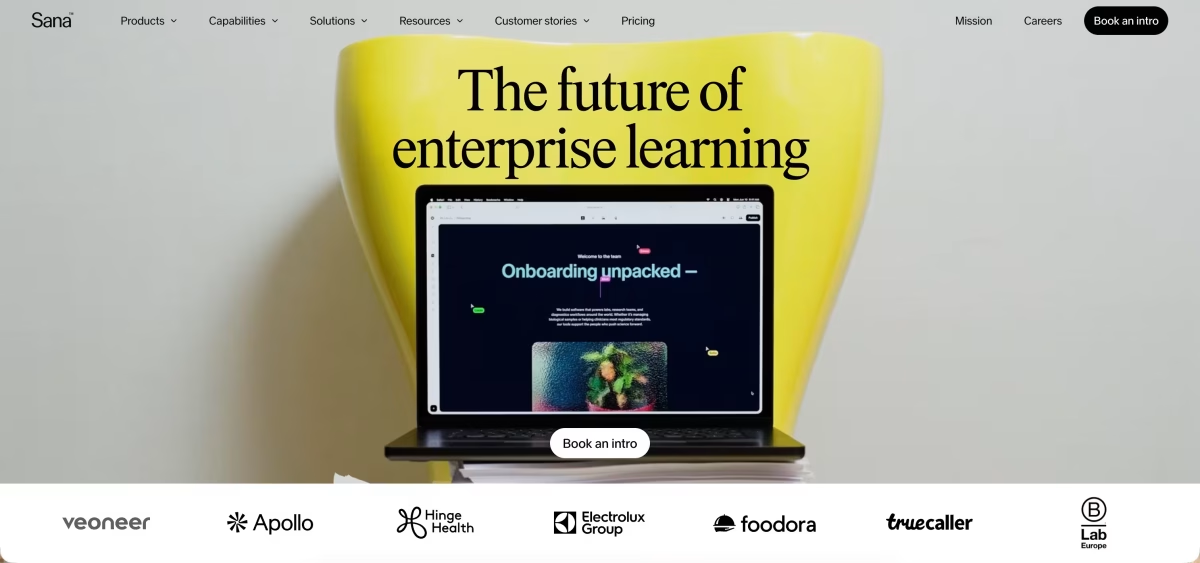
I went deep on Sana Learn recently, and I want to give you the honest picture: what it actually does, what it costs, how it stacks up against the competition, and where it falls short.
This isn't a platform for everyone, in fact, it's explicitly not built for the solo creator or the small team.What Is Sana Learn?
Sana Learn is an AI-native learning platform built by Sana Labs, a company founded in Stockholm in 2016.
The "AI-native" label gets thrown around a lot these days, but in Sana's case it actually means something specific: the platform wasn't built as a traditional LMS with AI features grafted on later. The architecture was built with AI first in mind.
The platform functions as a hybrid of 4 things that most companies currently pay separately for:
A Learning Management System
A Learning Experience Platform
A content authoring tool (think Articulate 360)
And a virtual classroom.
Sana's pitch is that having all of these in one place, with an AI layer that can actually connect the dots between them, is more valuable than the sum of the parts.
The biggest news around Sana recently is that Workday acquired the company for approximately $1.1 billion in late 2025, completing the deal in November.
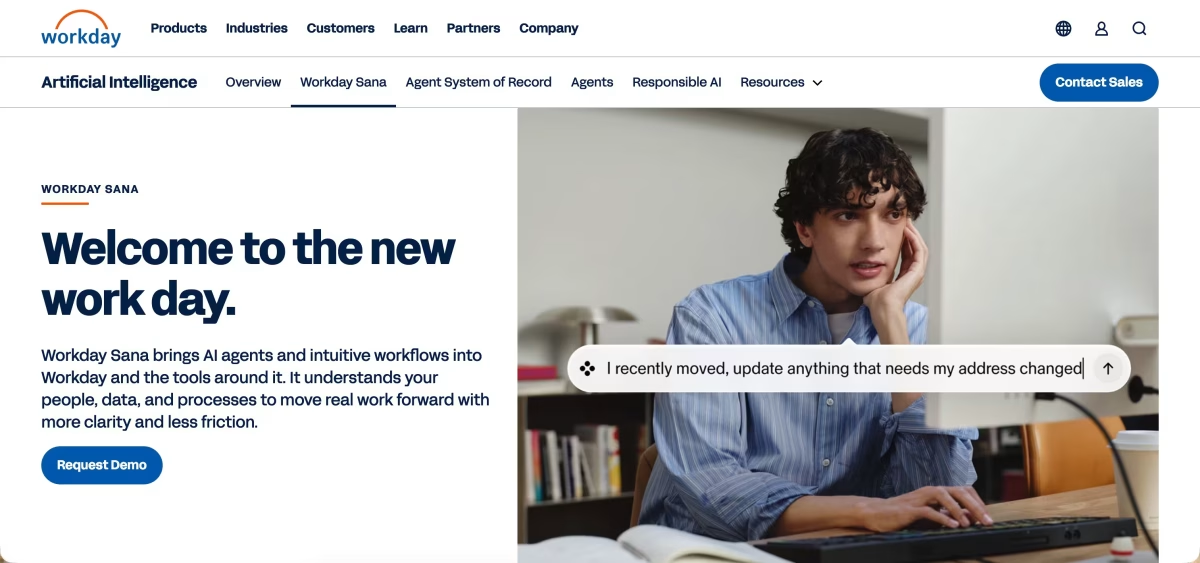
That's the largest acquisition in Workday's history, which tells you everything about how seriously the enterprise software world is taking AI-powered learning.
The plan is to integrate Sana's technology into Workday's broader platform, though Sana Learn will continue to operate as a standalone product for organizations that aren't in the Workday ecosystem.
Sana Learn Feature Overview
AI Authoring
The authoring environment is where Sana makes its most compelling case. You can feed it an existing PDF, a technical manual, or a raw document, and it will generate a structured course with assessments and interactive elements.
Polestar (the EV company) saved around 900 hours of work by converting existing PowerPoints and PDFs into interactive modules, about 15 hours saved per course across their first 60 courses.
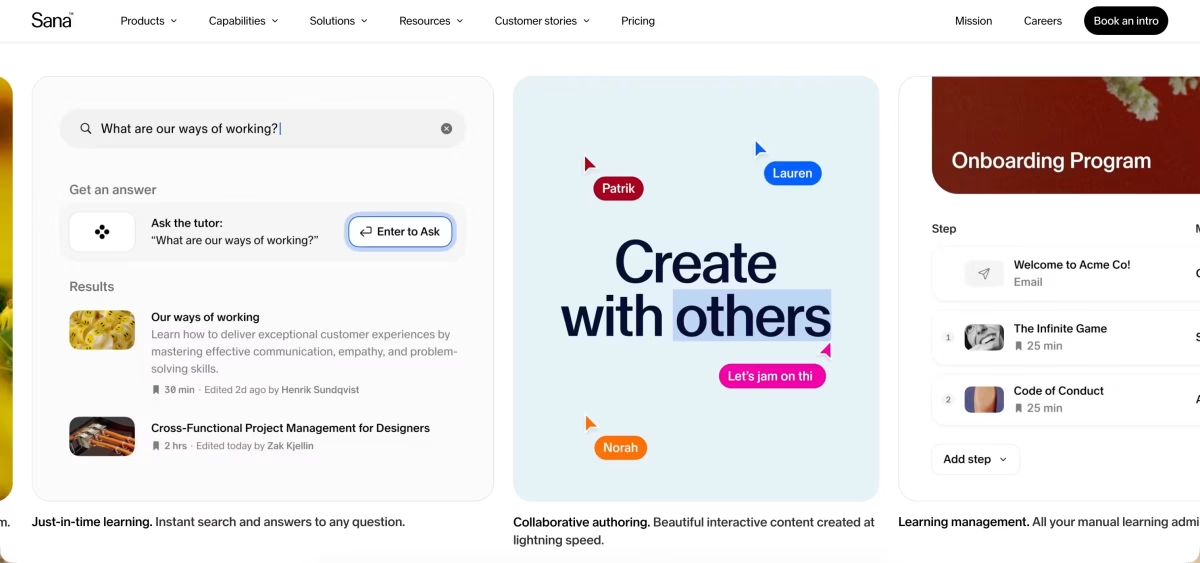
The interface is described as "Figma-like", collaborative, drag-and-drop, designed so that subject matter experts (not just instructional designers) can build decent content without a lot of training.
That's a real shift from older platforms where content creation required a specialist.
Translation is also built in, with native DeepL integration covering over 50 languages. For global organizations, that alone changes the economics of localization significantly.
AI Tutor
Sana includes a personal AI tutor baked into the learning experience. This isn't a generic chatbot, but grounded in your organization's actual data.
Sana uses something called Retrieval-Augmented Generation (RAG), which means when an employee asks a question, the AI is pulling from your company's Slack messages, SharePoint documents, GitHub repositories, Salesforce data, and other integrated sources, not just generic internet knowledge.
The practical result is that instead of a learner finishing a module and having to go hunt for answers elsewhere, the tutor can answer context-specific questions in real time.
This is genuinely useful for technical training where the "answer" is often buried in internal documentation that no one can find.
Semantic Search Across Your Entire Knowledge Base
One of the more underrated features is the universal semantic search. Employees spend roughly 1.9 hours a day searching for information (that's a widely cited figure from research Sana references).
Sana's search indexes across all your connected apps with sub-100ms latency and understands meaning, not just keywords. A global law firm reported over 60% time savings and 200% efficiency improvement using Sana's knowledge retrieval features.
Built-In Virtual Classroom
Unlike a lot of LMS platforms that send you off to Zoom or Teams and then lose the data from that session, Sana has a native virtual classroom with breakout rooms, collaborative notepads, and real-time polling.
Every session gets automatically recorded, transcribed, and turned into a searchable knowledge asset. That's a genuinely smart design choice, live sessions stop being transient events and become permanent organizational knowledge.
Analytics
The analytics dashboard lets admins query data in plain English. You can literally type "which managers in the EMEA region have the lowest completion rates?" and get a visualization back.
The platform also does predictive skill forecasting, identifying gaps before they become problems, rather than reporting on what already went wrong.
For L&D leaders who are tired of pulling manual reports, this is a big deal.
Sana Learn Pricing
Here's where I have to be straightforward with you: Sana Learn is not cheap, and it's not trying to be.
There are two main tiers:
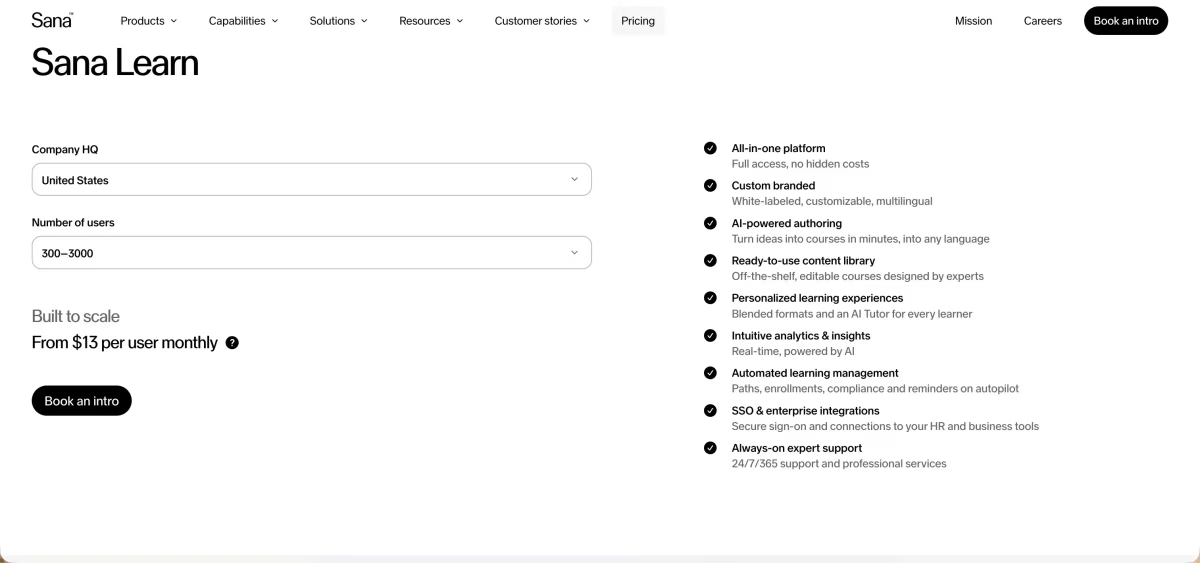
Core Plan: $13 per user per month, with a mandatory minimum of 300 users. That works out to at least $46,800 per year before you've signed a single enterprise deal.
[sana pricing]
If your organization has fewer than 300 people, you're paying for seats that don't exist, a company with 150 employees effectively pays $26/user/month because they're forced to hit the minimum.
Enterprise Plan: Custom pricing, which means you need to talk to sales. This tier adds SSO, SCIM provisioning, open API access, HRIS connectors, and proper SLA-backed support.
Implementation is apparently faster than legacy platforms, most organizations are functional in 2 to 4 weeks compared to the 3-to-6-month cycles you'd deal with at SAP SuccessFactors.
There's also an AI-powered SCORM/xAPI importer that handles content migration. Sana makes a case for total cost of ownership that factors in eliminating third-party agency fees and reducing admin headcount, but that math only works at a certain scale.
The bottom line: if you're under 300 users/employees, Sana isn't your platform right now.
How Sana Compares to the Competition
Sana vs. Docebo
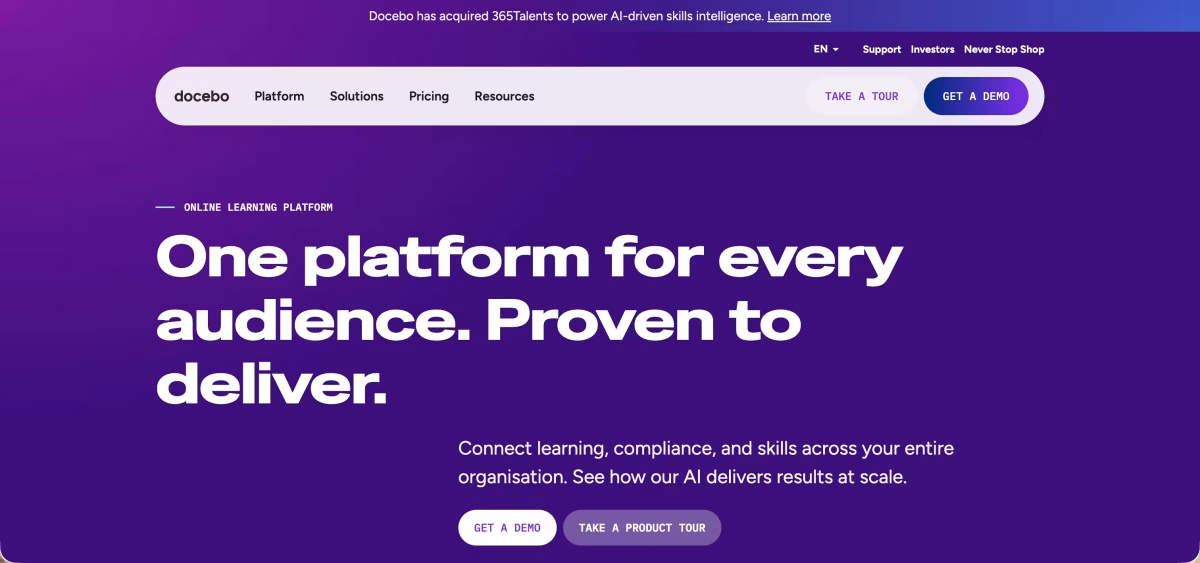
Docebo is the most direct enterprise LMS competitor to benchmark against.
Docebo is mature, highly configurable, and particularly strong for extended enterprise use cases, training partners, customers, and external audiences.
Where Sana wins is speed (2-4 weeks deployment vs. Docebo's 6-12 weeks) and the depth of its AI integration. Docebo uses AI for content tagging and recommendations; Sana uses AI for authoring, knowledge retrieval, tutoring, and analytics simultaneously.
Where Docebo wins is feature depth for complex global operations and a longer track record with regulated industries.
Sana vs. Legacy Platforms (Cornerstone, SAP SuccessFactors)
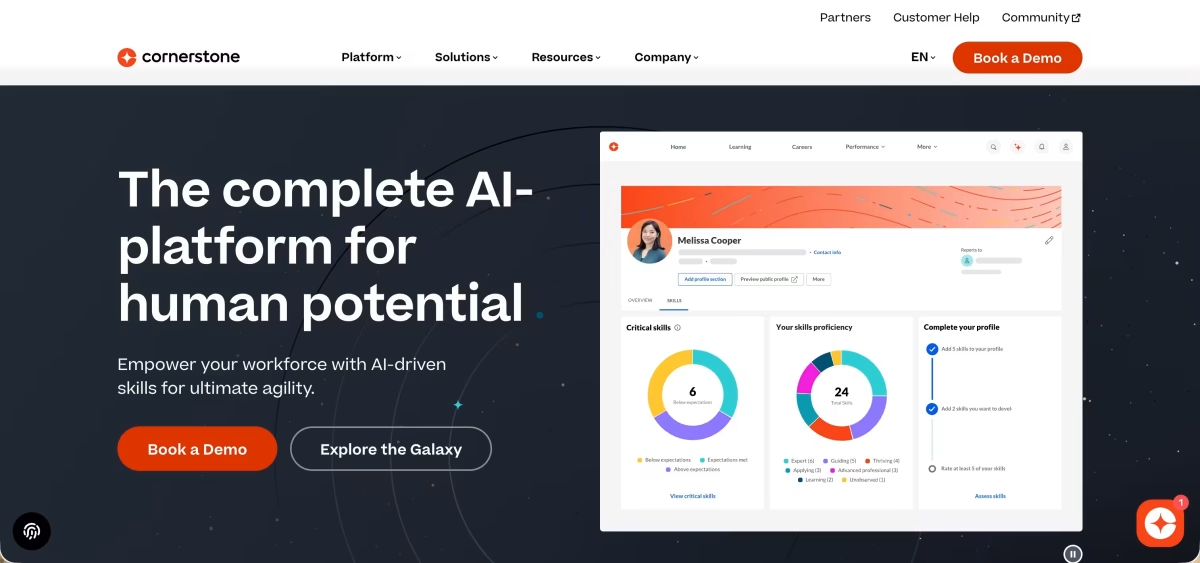
If Docebo is the modern competitor, the legacy platforms are really in a different conversation. Cornerstone and SAP SuccessFactors are built on code that predates smartphones.
They've added AI features as plugins, and it shows. Deployment can take 6-12 months. The user experience is frequently described as "clunky."
Their advantage is that they've been in highly regulated industries for decades and have compliance infrastructure that's deeply tested. If you're in healthcare or finance and need that legacy compliance coverage, you might be stuck with them, but even then, Sana is building in that direction.
Sana vs. Microsoft Viva Learning
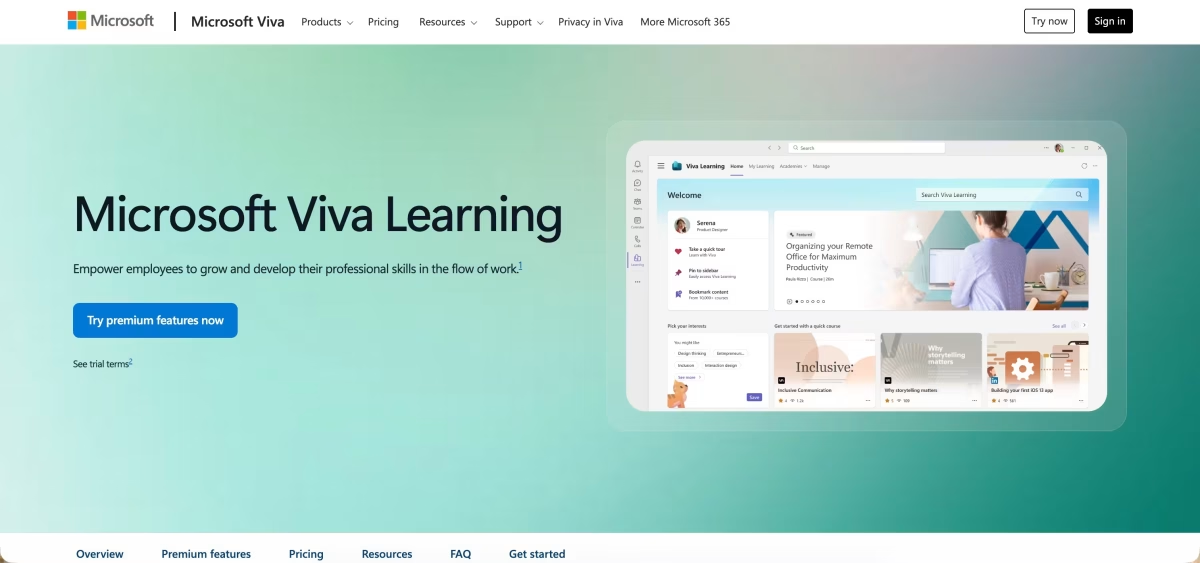
This is the matchup I find most interesting, because Microsoft Viva Learning is "free" for organizations already paying for M365. The honest answer is that Viva Learning and Sana are doing different things.
Viva Learning is primarily a content aggregator, it surfaces LinkedIn Learning or Coursera courses inside Microsoft Teams. Sana actually indexes your internal knowledge, creates content from it, and provides a tutoring experience.
If your organization's learning strategy is mostly "buy courses and assign them," Viva Learning might be enough. If you want to turn your own institutional knowledge into training, Sana is in a different league.
The Workday Angle
Now that Workday owns Sana, the competitive picture shifts.
If your organization runs Workday for HR and Finance, the integration of Sana's skill-mapping with Workday's talent data creates something genuinely new: a system that can suggest learning pathways based on actual career trajectory data from HR, triggered by real performance signals from the business.
No other vendor can replicate that right now. If you're a Workday shop evaluating your LMS options, Sana just became the obvious path.
The Honest Shortcomings
Now let’s talk about where we need to be honest and what the platform currently lacks.
No mobile app: As of early 2026, Sana runs through mobile browsers only, no native iOS or Android app, no offline mode, no push notifications.
For desk-based knowledge workers this is probably fine. For frontline workers, healthcare staff, or anyone who needs training access away from a screen, this is a real gap compared to platforms like Absorb LMS.
The AI is only as good as your data: This is the one that trips organizations up. Sana's knowledge search and AI tutoring rely on grounding responses in your company's actual documentation.
If your internal docs are messy, outdated, or contradictory, the AI will produce messy, outdated, or contradictory answers. You need to invest in "knowledge governance" before deployment, cleaning up internal documentation, and that work costs time and money that doesn't show up in the licensing estimate.
Gamification is minimal: If your engagement strategy relies on badges, leaderboards, and complex point systems, Sana's minimalist approach will feel limited compared to platforms that have built gamification as a core feature.
Change management is real: Moving from a traditional, hierarchical LMS to a decentralized, AI-driven model is a cultural shift, not just a software swap.
Employees and managers need to learn to trust an AI tutor and a knowledge model that doesn't fit the old "module completion" paradigm. That requires genuine organizational change management, and Sana can't do that for you.
Frequently Asked Questions
1) Is Sana Learn suitable for small businesses?
Not really. The 300-user minimum for the Core Plan at $13/user/month means a minimum commitment of roughly $46,800 annually.
If you have fewer than 300 users, you're paying for empty seats. Sana is built for mid-to-large enterprises.
2) Does the Workday acquisition mean Sana will only work for Workday customers?
No. Sana Labs confirmed it will continue developing Sana Learn as a standalone product.
The Workday integration is an additional layer for Workday customers, not a replacement for the independent platform.
3) What systems does Sana integrate with?
Sana indexes data from Slack, GitHub, Salesforce, SharePoint, Notion, Jira, and other common enterprise tools.
The Enterprise tier adds HRIS connectors and open API access for custom integrations.
4) How long does implementation take?
Sana claims most organizations are functional within 2 to 4 weeks, with an AI-powered SCORM/xAPI importer handling content migration from legacy systems.
That's significantly faster than the 3-to-6-month timelines typical of legacy enterprise platforms.
5) Does Sana Learn have a mobile app?
As of 2026, no. The platform works through mobile browsers but lacks a native iOS or Android app, offline mode, or push notifications.
This is a notable gap for non-desk-based workforces.
6) How does the AI tutor work?
The AI tutor uses Retrieval-Augmented Generation (RAG) to ground its answers in your organization's actual internal data, documents, Slack history, technical manuals, and other indexed sources.
It's not pulling from generic internet knowledge; it's answering questions based on what your company actually knows.
The accuracy of that depends heavily on the quality of your internal documentation.
